Mankind
Since the beginning of time, humanity has looked to the sky. Across cultures and civilizations, we have imagined Gods to explain the unknown, give meaning to existence, and embody our highest aspirations. As mortals, we seek transcendence: to find purpose, to discover joy through harmony, and ultimately, to better understand our condition and destiny as human beings.
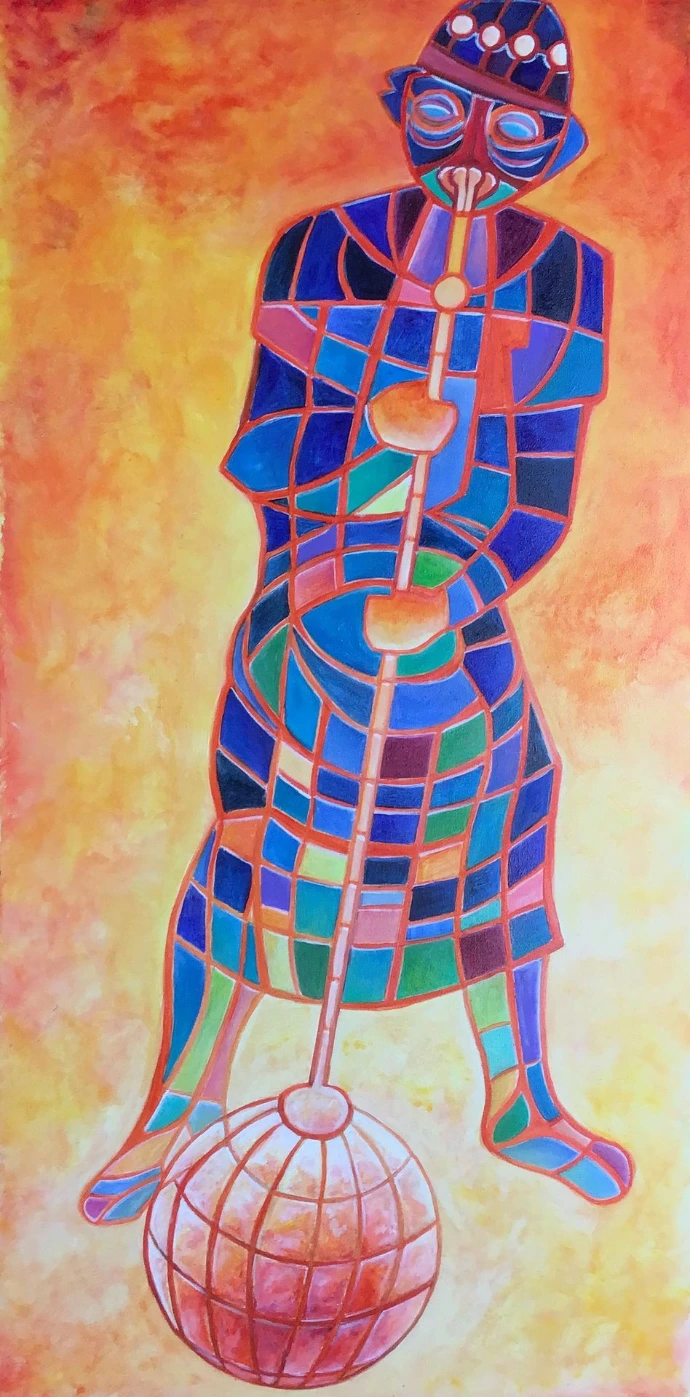
I. The Creation of the World (2020)
The beginning of everything. The moment when the universe emerges in a silent and intimate breath.
From a single breath, the creator, himself depicted as a glassblower in a glass mosaic, takes us from nothingness to being.
The world is born, fragile and evanescent like a crystal bubble.
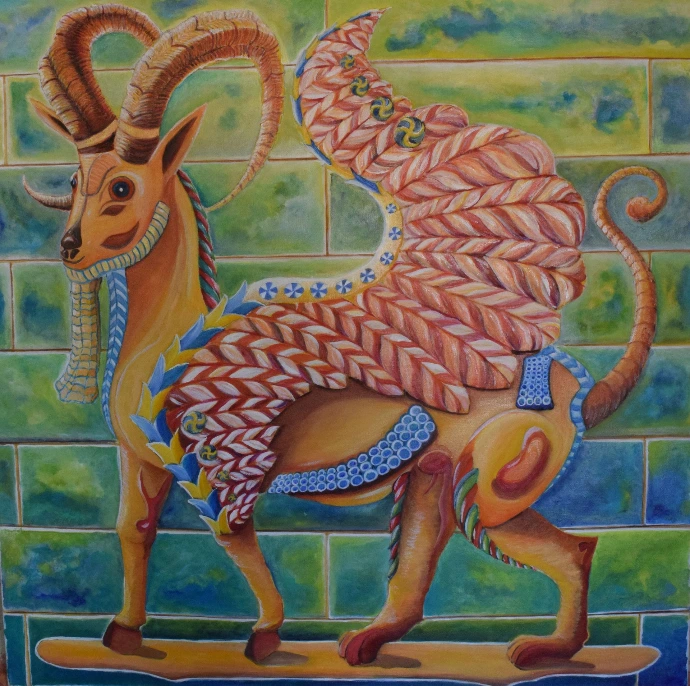
II. Persepolis (2014)
The winged goat as an imaginary deity — illusion of the mind or unrealized dream?
Drawing visual reference from the murals of the Palace of King Darius and the glazed tiles of the Ishtar Gate in ancient Babylon, this work reimagines the mythic motifs of Persia through the figure of a divine hybrid.
The creature, both guardian and symbol of transcendence, echoes the ancient reliefs of lions, dragons, and bulls that once proclaimed the protective power of the gods and the enduring prosperity of the city.
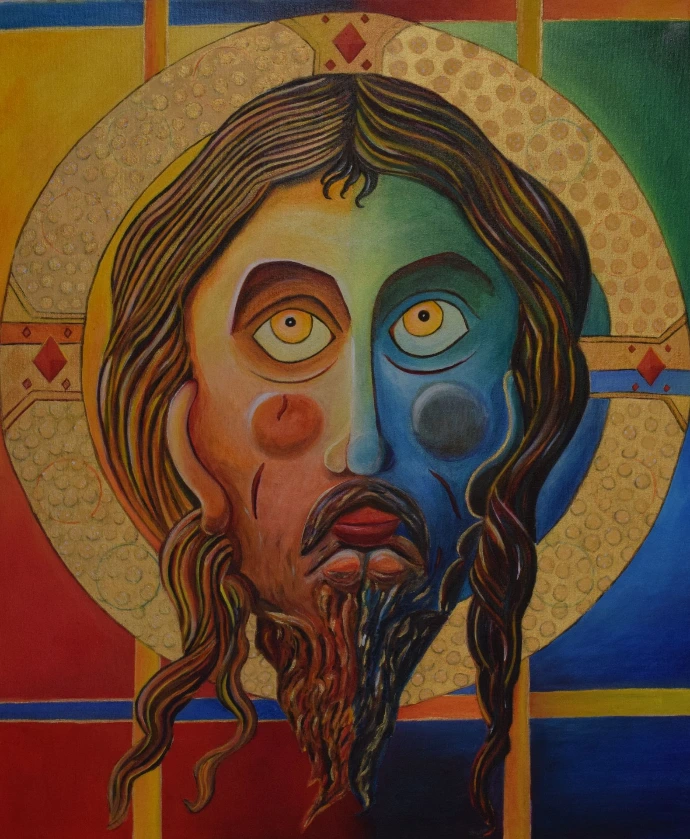
III. The Icon of the Four Quadrants (2014)
In Orthodox tradition, icons are often called “theology in color.” Byzantine iconography has long been understood as a window into heaven — a sacred space where line and pigment transcend representation to reveal divine presence.
In this contemporary vision, the face of Christ emerges from a radiant harmony of four hues — blue, green, red, and yellow — each carrying its own spiritual resonance: blue for the divine mystery of John, green for the earthly compassion of Luke, red for the fiery proclamation of Mark, and yellow for the luminous kingship of Matthew.
Together, they form a symphony of faith — a modern meditation on the timeless language of sacred color.
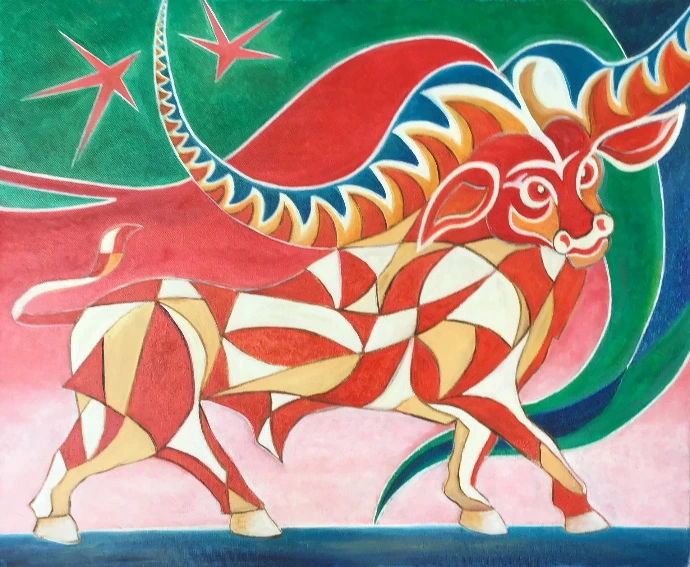
IV. Gao Mata (2021)
In Hindu
mythology, Goa Mata — the sacred cow — is venerated as a symbol of
abundance, motherhood, and the eternal giver of life.
Regarded
as the source of all prosperity, she embodies both material and spiritual
nourishment, sustaining the world through her gentle presence.
This
artwork reimagines the sacred figure not merely as an animal, but as a cosmic
archetype — an embodiment of compassion, fertility, and the enduring belief in
balance and generosity as pathways to true prosperity.
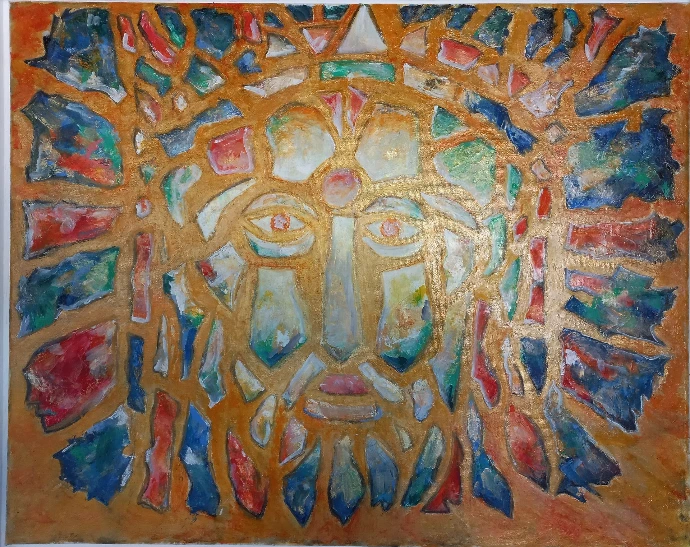
V. Shards of Divinity (2024)
“Oh Lord,
where have you been?” “I have been walking here and there, roaming across the
Earth, observing all that unfolds”, replied Satan.
If God embodies
light, order, and creation, then where does the shadow dwell?
Set against a gold background reminiscent of sacred icons, a fractured visage – seemingly divine - questions divine presence and human faith in a world where God’s presence is questioned and the devil walks freely.
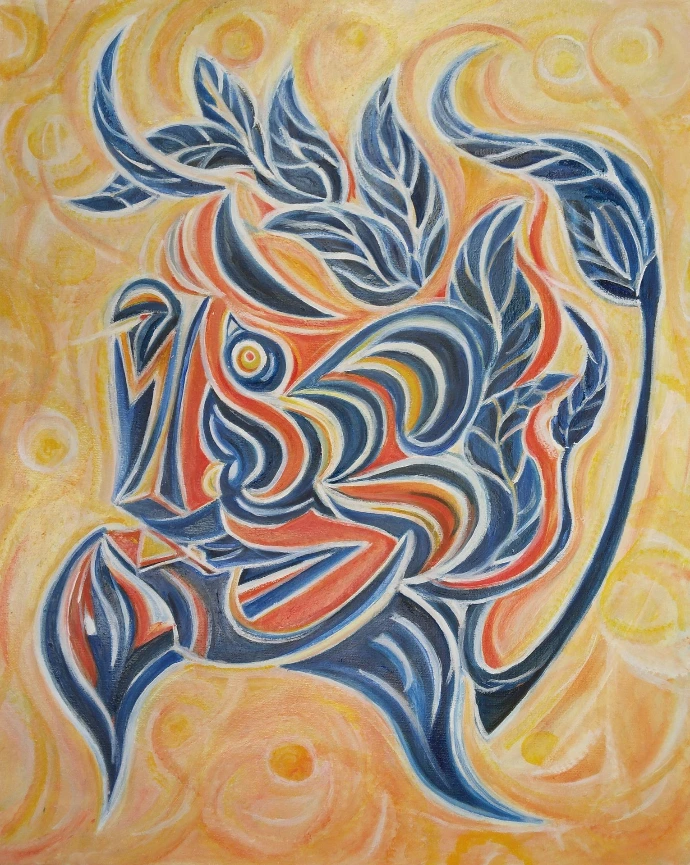
VI. Praying Fama (2024)
One eye
open, one closed — Fame sees only half the truth.
Some are
crowned without merit; others shine unseen.
Here, renown becomes prayer — a meditation on glory’s blindness and the quiet
grace of those who go unrecorded.
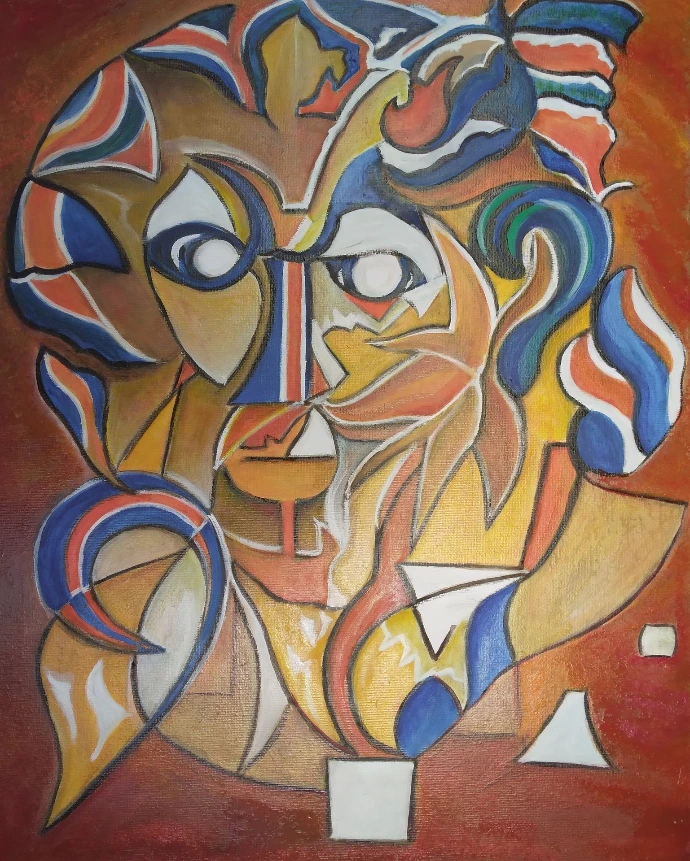
VII. Praying Baboon - God of the Forest and Primal Forces of Nature (2023)
A meeting of the sacred and the savage — a hymn to instinct, to the wild pulse beneath reason.
The baboon, guardian of the untamed, prays not in words but in rhythm.
A reminder that spirit, too, is animal — and that every prayer begins in the heartbeat of the earth.
Power
Life on Earth is a struggle. From the laws of nature to the history of civilizations, existence seems shaped by competition, domination and the will to prevail.
Is another world possible, or is civilization merely a thin veil over an underlying chaos?
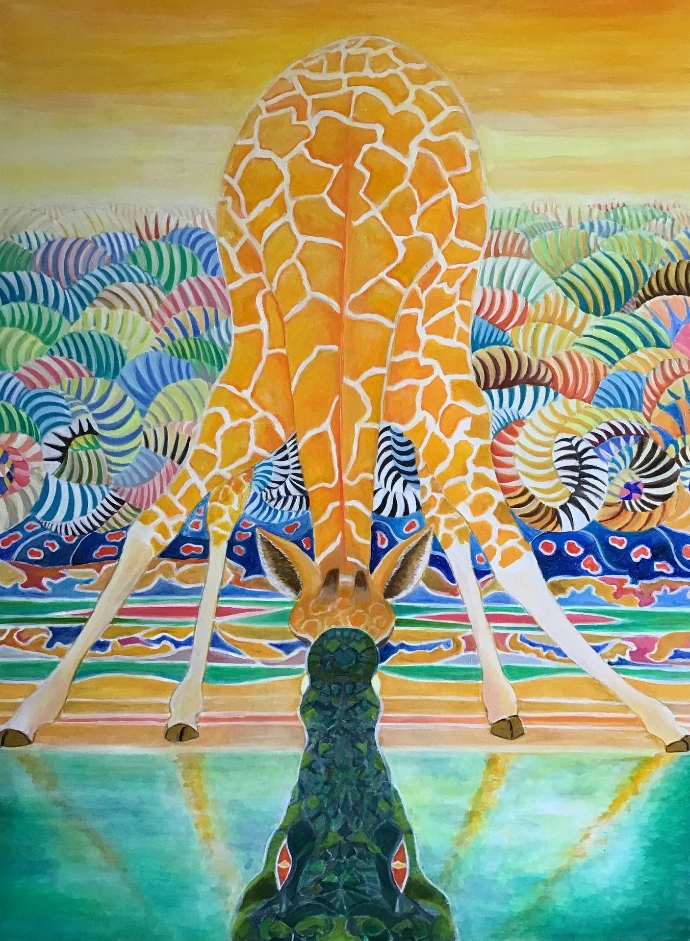
VIII. The Law of the Jungle (2020)
A deceptive moment of calm: a giraffe bends to drink while a crocodile waits beneath the surface.
Nature reminds us that beauty and danger can coexist, and that beneath apparent harmony, unseen forces are always at work.
Beyond the animal scene, The Law of the Jungle reflects on the fragile balances that shape both nature and human society—where power, self-interest, and survival often remain hidden, yet never far away.
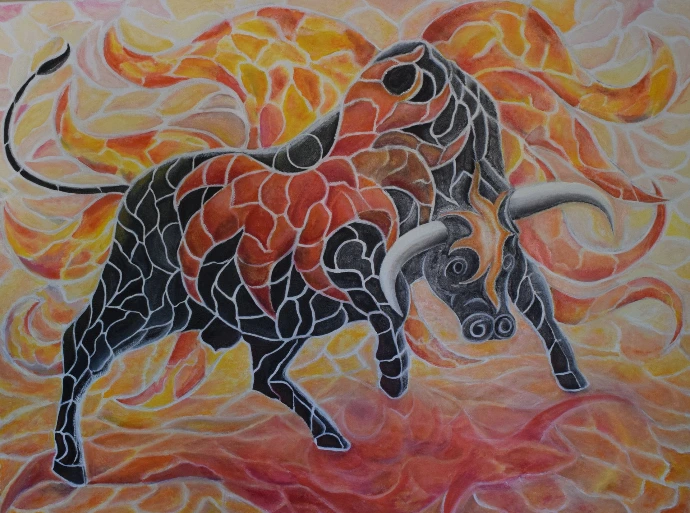
IX. Bullfighting as the Dance of Death (2016)
Life is an arena where man confronts a force greater than himself.
What begins as combat transforms into a spiritual ritual and a metaphysical drama — a dance of courage and mortality, where life and death face each other like two sides of the same mystery, poised between dust and eternity.
Life is a test of courage, for living means embracing the fire of what transcends us
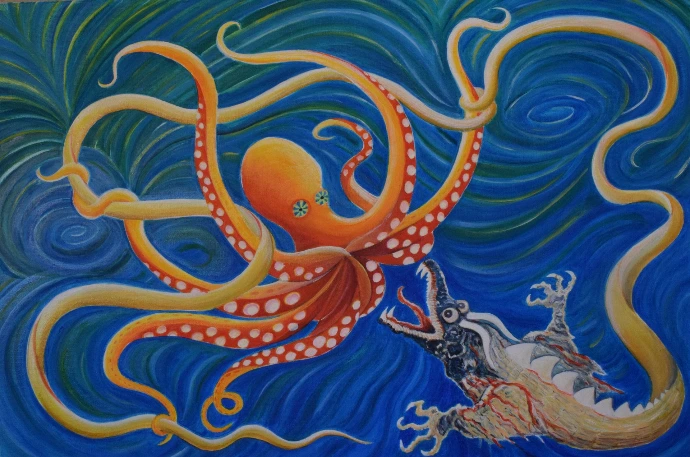
X. The Great Battle between the East and the West (2015)
A symbolic confrontation between a dragon and an octopus representing the enduring tension between Eastern and Western worldviews.
While Asian cultures often emphasize collectivism, harmony, and long-term tradition, Western societies tend to prioritize individualism, analytical reasoning, and personal autonomy.
Yet no victor emerges. Through this imagined confrontation beneath the waves, the artwork visualizes the complex interplay of civilizations whose differing ideals continue to shape the modern world.
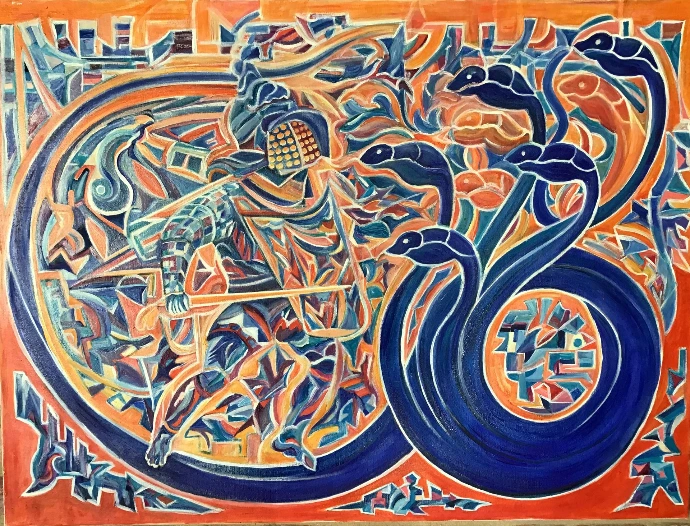
XI. Life as a Constant Battle (2021)
Within every soul lies a battlefield. Like the heroes of old, we face monsters that dwell not in the world, but within ourselves.
The serpents of doubt, illness, or fear test our courage and resolve. Yet the struggle is never in vain: through it we find strength, and in victory over ourselves, the path to wisdom and inner peace.
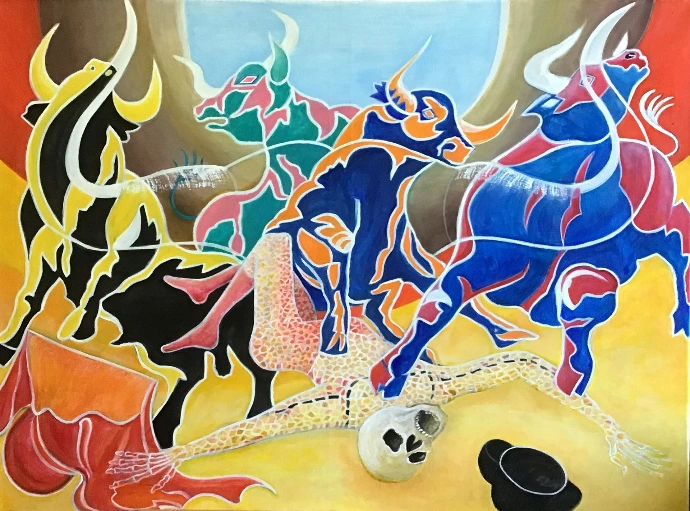
XII. The Impostor Syndrome (2020)
In a brightly lit arena, a fallen bullfighter lies defeated by four bulls, embodying his doubts and the relentless gaze of others. Their charging horns become silent accusations.
Amid the intensity of colour, the painting explores the fragile boundary between confidence and self-doubt: Am I good enough? Am I an impostor?
The fallen figure becomes a mirror of an inner struggle—the fear of being exposed, the weight of judgment, and the need to rise and move forward.
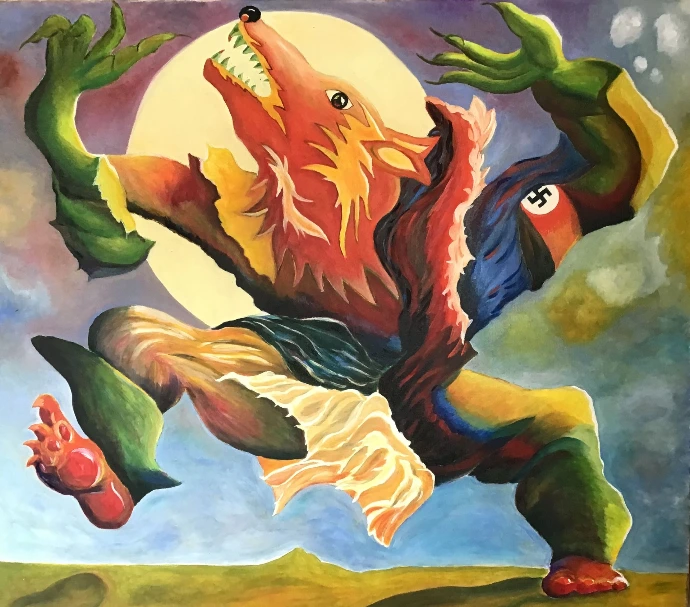
XIII. Leviathan - Haunted by the Horrors of the Holocaust (2013)
A nightmarish figure haunted by the memory of the Second World War and the Holocaust, this painting pays homage to the unsettling imagery of Max Ernst.
The wolf evokes the darkness of Les loups sont entrés dans Paris—a symbol of violence entering the heart of civilization.
Never forget: beneath the surface of order and culture, barbarism is never far away.
Future
After two world wars, the Holocaust, the atomic bomb, the climate crisis, and now the rise of AI, it seems that no god will come to save humanity from its own destiny.
The future is therefore ours to shape. It begins with responsibility: the ability to govern our own instincts, our power, and our choices.
Perhaps building a better world begins with a simple challenge: becoming the best version of ourselves.
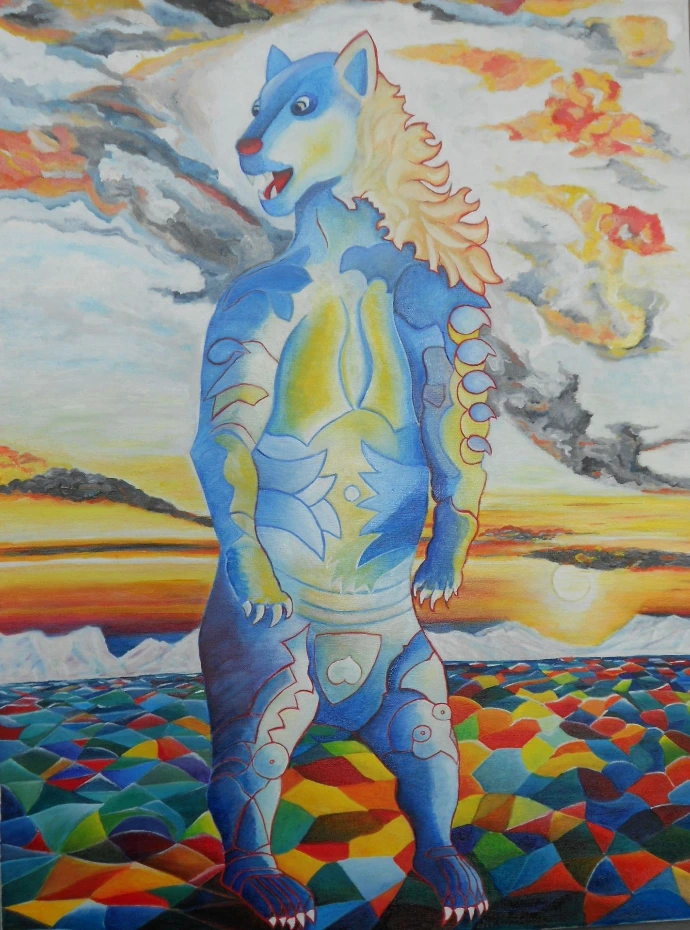
XIV. The Unbearable Lightness of Mankind’s Self-destruction (2013)
The last bear standing on a shrinking ice floe as biodiversity disappears at an alarming rate.
A haunting meditation on humanity’s impact on the planet, the painting confronts us with the paradox of human progress—the lightness of our existence weighed against the heavy cost of ecological collapse.
Both a warning and a reminder of the fragile beauty of our natural world, it calls us to reflect on our shared responsibility to protect what remains.
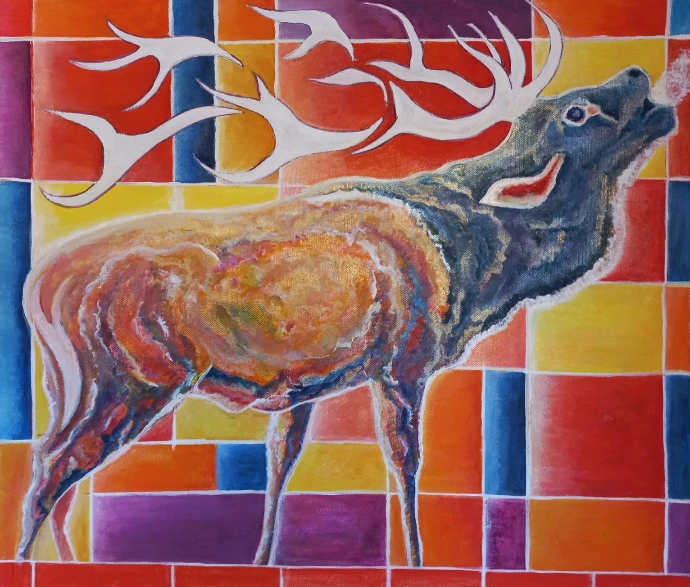
XV. The Cry of Nature (2025)
A great stag, the king of the forest, painted in vibrant hues, lifts its head toward the sky, its antlers dissolving into soaring birds.
Its raw cry echoes Edvard Munch’s The Scream—yet here, it is not humankind lamenting modern anxiety, but nature itself crying out for survival.
The stag, a symbol of renewal through the cyclical shedding of its antlers, becomes a metaphor for biodiversity under threat. Behind it, colourful geometric patterns evoke the fragmented, fast-moving contemporary world, contrasting with nature’s fragile vitality.
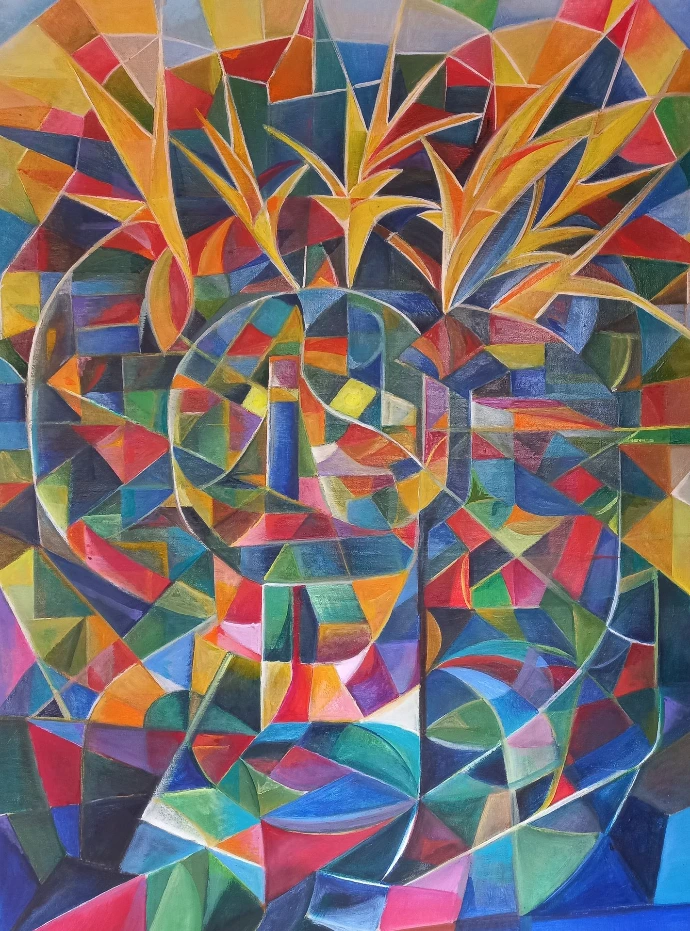
XVI. The Architects of Chaos (2025)
In a world where human harmony seems increasingly fragile, The Architect of Chaos pays tribute to the engineers of disorder—figures who operate in the shadows, sowing confusion much like others once built cathedrals.
Amid apparent chaos, the outline of a face emerges—partly hidden, crowned, and watchful. Two eyes, glowing at the heart of a chromatic storm, invite us to contemplate their work.
Could chaos be a necessary precursor, a raw material for creation itself? With the hope that from disorder, a better world will arise.
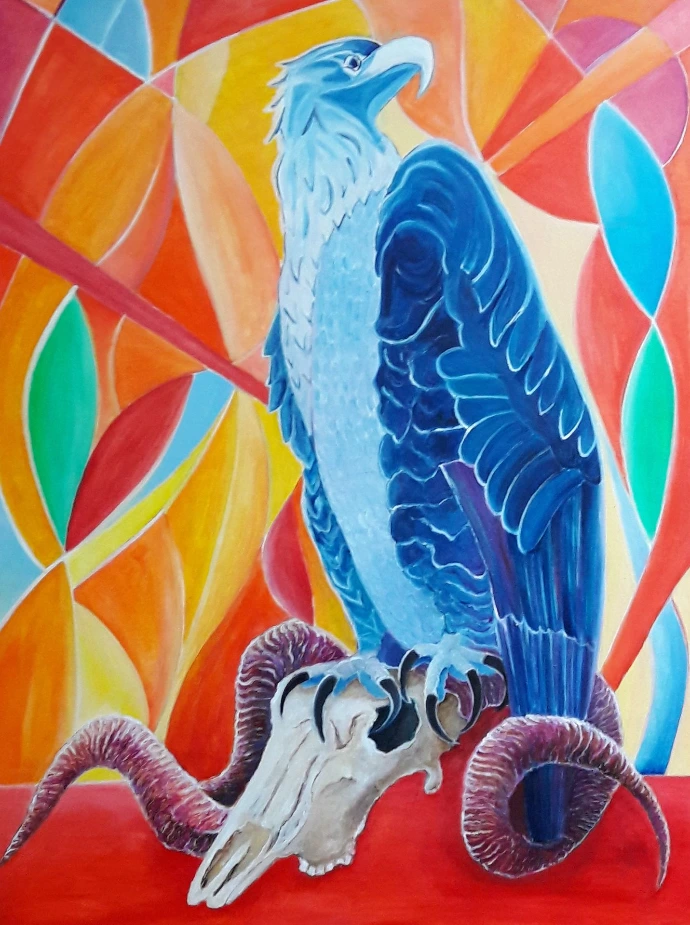
XVII. The Throne of Emptiness (2020)
A majestic bird of prey, symbol of power and sovereignty, perches upon the remains of an exhausted world. Here, domination opens onto no horizon; it reigns over nothingness.
Inspired by contemporary doctrines of supremacy and predation, the painting questions the illusion of limitless power. When conquest becomes an end in itself, it consumes its own foundations—the planet, life, and its resources.
The triumphant figure ultimately becomes absurd: to rule over a destroyed world is to lose the very meaning of power. Absolute domination carries within it the seeds of self-destruction.
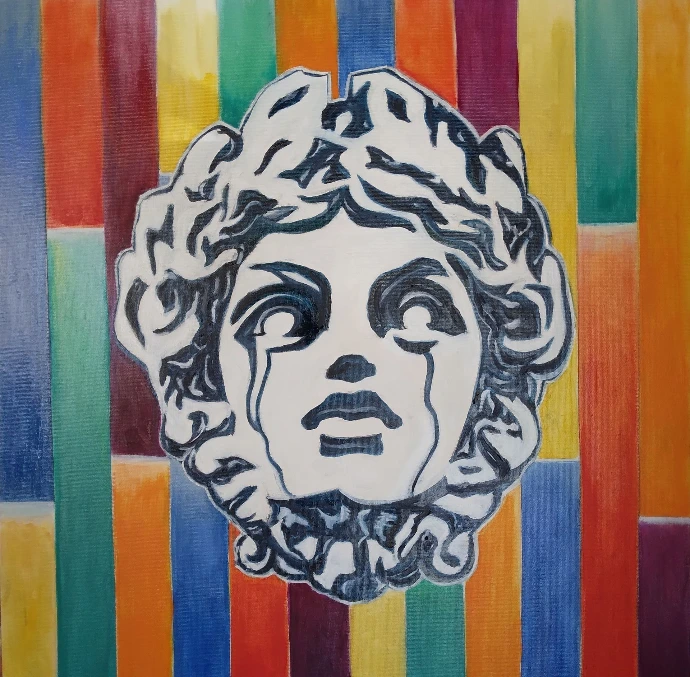
XVIII. Apollo in Tears (2023)
From the heights of heaven, Apollo watches mankind’s self-destruction. He weeps over a world unraveling—his creation undone by the very hands he shaped. The Earth groans beneath humanity’s fury, and even a god is powerless to intervene.
Behind him, a vibrant rainbow of twelve vertical stripes evokes the passage of time. Their complementary colours collide in a kaleidoscopic arrangement. Beauty and despair coexist in a world at risk, where even divine power is powerless to prevent humanity from tearing itself apart.
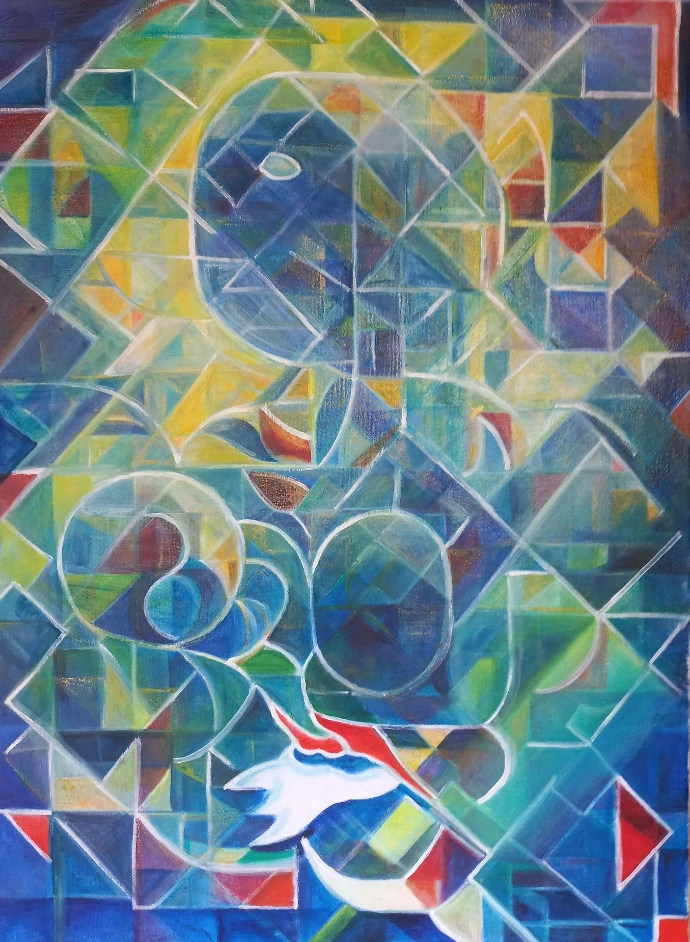
XIX. Mitochondrial Eve (2025)
Mitochondrial Eve pays homage to women—the countless mothers, creators, carers, thinkers and changemakers whose strength, compassion and resilience continue to make our world a better place.
Genetic research suggests that every living human can trace their maternal lineage back to a woman who lived in Africa around 150,000–200,000 years ago. She becomes here a symbol not only of our shared origins, but of the enduring power of the feminine.
In a world too often shaped by toxic masculinity, women deserve not merely recognition, but to be heard, celebrated and promoted..
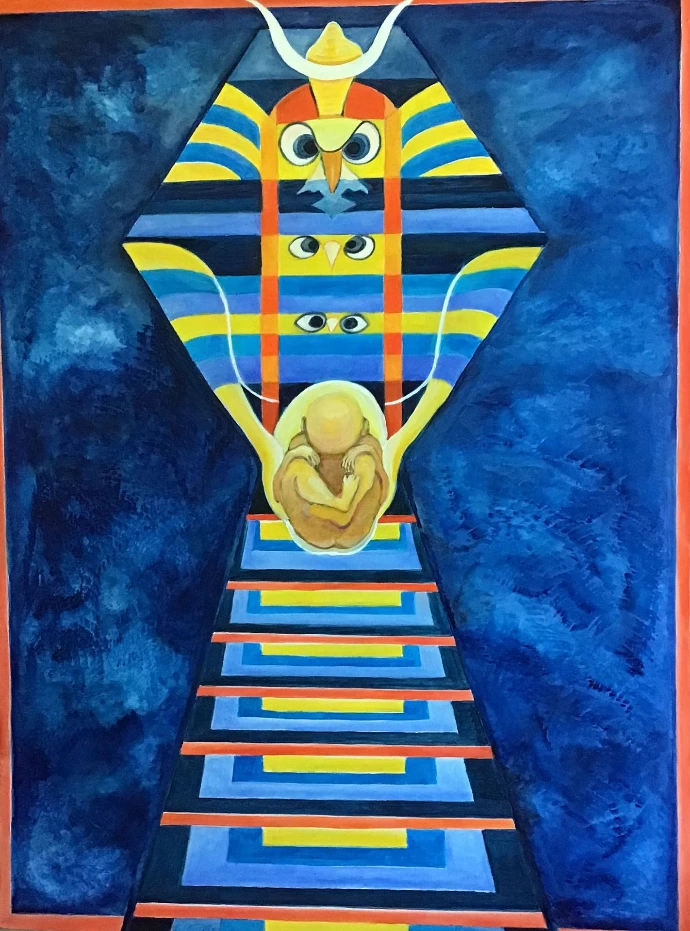
XX. The Omen (2019)
A mother-god, enthroned within the geometry of pyramids, evokes the ancient Egyptian deities—guardians of the mysteries between life and afterlife. Yet in her womb she carries not merely a child, but the very question of the future itself.
Where is humanity heading? Will artificial intelligence guide us toward a radiant utopia or cast us into ruin and destruction? Upon which world shall our children awaken, and what destiny will they inherit from the choices we are making today?
A fundamental question
My paintings emerge from a fundamental question : how can humanity, fully aware of the fragility of our planet and the threats to its future, continue along paths that may ultimately undermine the very conditions that sustain us? We are perhaps the first generation to fully understand the limits of the Earth and the consequences of exceeding them. And yet, like passengers on the Titanic, we continue to move forward, driven by greed, profit, and competing interests, as though the course were already set. What are we becoming? What kind of future are we creating—and what will we leave behind for generations to come?